Buy besthosting.eu ?
We are moving the project
besthosting.eu .
Are you interested in purchasing the domain
besthosting.eu ?
domain@kv-gmbh.de · 0541-91531010
Buy besthosting.eu ?
Is the inverse function of a bijective function also bijective?
Yes, the inverse function of a bijective function is also bijective. This is because a bijective function is both injective (one-to-one) and surjective (onto), meaning that each element in the domain maps to a unique element in the codomain and every element in the codomain is mapped to by an element in the domain. Therefore, the inverse function will also be injective and surjective, making it bijective as well. **
If g and g^(-1) are bijective, is f also bijective?
If g and g^(-1) are bijective, it means that g is a bijection and its inverse g^(-1) is also a bijection. In this case, if f is composed with g and g^(-1), then f is also bijective. This is because composing f with a bijection and its inverse will preserve the bijectivity of f. Therefore, if g and g^(-1) are bijective, then f will also be bijective. **


Similar search terms for Bijective
Top-Angebote
Products related to Bijective:
-
Combo Retail Shop Indoor WiFi Security Camera With Audio, Cloud & SD Card Storage Indoor WiFi Security Camera With Audio, Cloud & SD Card StorageIndoor WiFi Security Camera with 2Way Audio, Cloud and SD Card Storage, AI Detection Ensure peace of mind with this Indoor WiFi Home Security Camera designed to provide advanced monitoring features for your home. Whether you want to keep an eye on...44,97 $*Shipping: 0,00 $Secure redirect to the provider
-
Cloud Couch Modular Sectional Sofa with Ergonomic Support and StorageErgonomic Support with Convenient Storage: Designed for ultimate relaxation, the sofa's elevated backrest provides full-length support for your back and neck, banishing discomfort during long lounging sessions.563,49 $*Shipping: 0,00 $Secure redirect to the provider
-
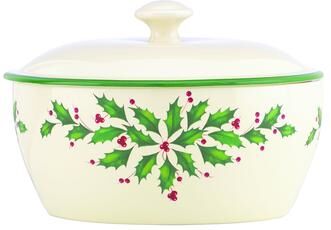
Lenox Hosting The Holidays Covered CasseroleThis Hosting the Holidays Casserole Dish is ideal for serving large dinner parties. Crafted of durable ivory porcelain, this spacious dish features a festive holly motif and comes with a matching lid.45,99 $*Shipping: 0,00 $Secure redirect to the provider
-
Lenox Hosting The Holidays Bread TrayWhether presenting an assortment of rolls or a buttery log of Texas toast, this festive ceramic Hosting the Holidays Bread Tray will not disappoint. The tray features a holly motif and is accented with 24-karat gold.44,49 $*Shipping: 0,00 $Secure redirect to the provider



-
If an inverse function of a bijective function exists, is it also bijective?
Yes, if an inverse function of a bijective function exists, then it is also bijective. This is because a bijective function is both injective (one-to-one) and surjective (onto), and its inverse will also be injective and surjective. Therefore, the inverse function will also be bijective. **
-
When is a function bijective?
A function is bijective when it is both injective and surjective. In other words, a function f: A → B is bijective if every element in the codomain B is mapped to by exactly one element in the domain A, and every element in the codomain B is mapped to by at least one element in the domain A. This means that every element in the codomain has a unique pre-image in the domain, and every element in the codomain is mapped to by the function. **
-
What is the function bijective?
The function bijective, also known as a one-to-one correspondence, is a type of function that is both injective and surjective. This means that for every element in the domain, there is a unique element in the codomain that it maps to, and every element in the codomain is mapped to by at least one element in the domain. In other words, a bijective function establishes a one-to-one and onto relationship between the domain and the codomain, ensuring that every element has a unique counterpart and no element is left out. This property makes bijective functions useful in various mathematical and computational contexts, such as cryptography, data compression, and permutation algorithms. **
-
What is a bijective mapping?
A bijective mapping is a function between two sets that is both injective and surjective. In other words, every element in the domain is paired with a unique element in the codomain, and every element in the codomain is paired with at least one element in the domain. This means that there is a one-to-one correspondence between the elements of the two sets. Bijective mappings are also known as one-to-one and onto functions. **


How can one restrict the domain and range in order to make f bijective?
To make a function \( f \) bijective, we need to ensure that it is both injective (one-to-one) and surjective (onto). To restrict the domain and range of \( f \) to make it bijective, we can remove elements that cause multiple inputs to map to the same output (making it injective) and ensure that every element in the codomain is being mapped to (making it surjective). By carefully selecting the domain and range of \( f \), we can create a function that is bijective. **
When is a matrix injective, surjective, bijective?
A matrix is injective if its columns are linearly independent, meaning that the only solution to the equation Ax=0 is x=0. A matrix is surjective if its columns span the entire codomain, meaning that for every element in the codomain, there exists at least one vector x such that Ax=b. A matrix is bijective if it is both injective and surjective, meaning that it has a unique solution for every element in the codomain. **
Top-Angebote
Products related to Bijective:
-
Elama Signature Divine Hosting 5 Piece Bamboo Block Appetizer and Condiment Server SetWow your guests with the beautiful and elegant serveware set from the Elama Signature Collection. Elegant serving cups are constructed of stoneware that are dishwasher and microwave safe.47,99 $*Shipping: 0,00 $Secure redirect to the provider
-
Elama Signature Divine Hosting 12 Inch 7 Piece Lazy Susan Appetizer and Condiment Server SetWow your guests with the beautiful and elegant serveware set from the Elama Signature Collection. Elegant serving bowls are constructed of stoneware that are microwave and dishwasher safe.44,99 $*Shipping: 0,00 $Secure redirect to the provider
-
Combo Retail Shop Indoor WiFi Security Camera With Audio, Cloud & SD Card Storage Indoor WiFi Security Camera With Audio, Cloud & SD Card StorageIndoor WiFi Security Camera with 2Way Audio, Cloud and SD Card Storage, AI Detection Ensure peace of mind with this Indoor WiFi Home Security Camera designed to provide advanced monitoring features for your home. Whether you want to keep an eye on...44,97 $*Shipping: 0,00 $Secure redirect to the provider
-
Cloud Couch Modular Sectional Sofa with Ergonomic Support and StorageErgonomic Support with Convenient Storage: Designed for ultimate relaxation, the sofa's elevated backrest provides full-length support for your back and neck, banishing discomfort during long lounging sessions.563,49 $*Shipping: 0,00 $Secure redirect to the provider
-
Is the inverse function of a bijective function also bijective?
Yes, the inverse function of a bijective function is also bijective. This is because a bijective function is both injective (one-to-one) and surjective (onto), meaning that each element in the domain maps to a unique element in the codomain and every element in the codomain is mapped to by an element in the domain. Therefore, the inverse function will also be injective and surjective, making it bijective as well. **
-
If g and g^(-1) are bijective, is f also bijective?
If g and g^(-1) are bijective, it means that g is a bijection and its inverse g^(-1) is also a bijection. In this case, if f is composed with g and g^(-1), then f is also bijective. This is because composing f with a bijection and its inverse will preserve the bijectivity of f. Therefore, if g and g^(-1) are bijective, then f will also be bijective. **
-
If an inverse function of a bijective function exists, is it also bijective?
Yes, if an inverse function of a bijective function exists, then it is also bijective. This is because a bijective function is both injective (one-to-one) and surjective (onto), and its inverse will also be injective and surjective. Therefore, the inverse function will also be bijective. **
-
When is a function bijective?
A function is bijective when it is both injective and surjective. In other words, a function f: A → B is bijective if every element in the codomain B is mapped to by exactly one element in the domain A, and every element in the codomain B is mapped to by at least one element in the domain A. This means that every element in the codomain has a unique pre-image in the domain, and every element in the codomain is mapped to by the function. **
Similar search terms for Bijective
-
Lenox Hosting The Holidays Covered CasseroleThis Hosting the Holidays Casserole Dish is ideal for serving large dinner parties. Crafted of durable ivory porcelain, this spacious dish features a festive holly motif and comes with a matching lid.45,99 $*Shipping: 0,00 $Secure redirect to the provider
-
Lenox Hosting The Holidays Bread TrayWhether presenting an assortment of rolls or a buttery log of Texas toast, this festive ceramic Hosting the Holidays Bread Tray will not disappoint. The tray features a holly motif and is accented with 24-karat gold.44,49 $*Shipping: 0,00 $Secure redirect to the provider
-
Oliphant Cloud StorageThe Oliphant Cloud Storage is a cool and quirky way of storing an array of personal items. This space-saving organiser is not only a fun interiors item but it is also highly practical. Perfect for holding your phone, keys, receipts and coins, the product is designed to look like a cloud and features several sections of varying sizes, whilst the hidden compartment that's built into the base is ideal for storing important documents such as your passport or event tickets. Durable wood construction Hidden compartment ideal for important documents Incorporates different sized sections22,49 £*Shipping: 3,50 £Secure redirect to the provider
-
Stellar Stoneware Bantham Hosting For 4 SetIntroduce calm, contemporary style to your table with the Stellar Stoneware Bantham collection. Defined by smooth, modern contours and a soft green reactive glaze, each piece brings a fresh, artisan-inspired feel to everyday dining. Crafted from durable stoneware and fired for exceptional strength, the range offers excellent resistance to chipping and everyday wear. The naturally smooth glazed finish resists staining, cleans with ease, and provides a reassuringly balanced feel in hand. Its thick stoneware construction also enhances heat retention, helping dishes stay warmer for longer. Designed for modern living, every piece is microwave, dishwasher, and oven safe (up to 180°C), making the collection as practical as it is elegant—ideal for both daily use and relaxed entertaining. Set includes: 4 dinner plates, 4 side plates, 4x pasta bowls, 4 cereal bowls, 1x medium platter, 1x large platter and 1x serving bowl.199,95 £*Shipping: 0,00 £Secure redirect to the provider
-
What is the function bijective?
The function bijective, also known as a one-to-one correspondence, is a type of function that is both injective and surjective. This means that for every element in the domain, there is a unique element in the codomain that it maps to, and every element in the codomain is mapped to by at least one element in the domain. In other words, a bijective function establishes a one-to-one and onto relationship between the domain and the codomain, ensuring that every element has a unique counterpart and no element is left out. This property makes bijective functions useful in various mathematical and computational contexts, such as cryptography, data compression, and permutation algorithms. **
-
What is a bijective mapping?
A bijective mapping is a function between two sets that is both injective and surjective. In other words, every element in the domain is paired with a unique element in the codomain, and every element in the codomain is paired with at least one element in the domain. This means that there is a one-to-one correspondence between the elements of the two sets. Bijective mappings are also known as one-to-one and onto functions. **
-
How can one restrict the domain and range in order to make f bijective?
To make a function \( f \) bijective, we need to ensure that it is both injective (one-to-one) and surjective (onto). To restrict the domain and range of \( f \) to make it bijective, we can remove elements that cause multiple inputs to map to the same output (making it injective) and ensure that every element in the codomain is being mapped to (making it surjective). By carefully selecting the domain and range of \( f \), we can create a function that is bijective. **
-
When is a matrix injective, surjective, bijective?
A matrix is injective if its columns are linearly independent, meaning that the only solution to the equation Ax=0 is x=0. A matrix is surjective if its columns span the entire codomain, meaning that for every element in the codomain, there exists at least one vector x such that Ax=b. A matrix is bijective if it is both injective and surjective, meaning that it has a unique solution for every element in the codomain. **
* All prices are inclusive of VAT and, if applicable, plus shipping costs. The offer information is based on the details provided by the respective shop and is updated through automated processes. Real-time updates do not occur, so deviations can occur in individual cases. ** Note: Parts of this content were created by AI.