Buy besthosting.eu ?
We are moving the project
besthosting.eu .
Are you interested in purchasing the domain
besthosting.eu ?
domain@kv-gmbh.de · 0541-91531010
Buy besthosting.eu ?
Which microscope is a nano-microscope?
A nano-microscope is a type of microscope that is capable of imaging objects at the nanoscale, which is on the order of billionths of a meter. One example of a nano-microscope is the scanning tunneling microscope (STM), which uses a sharp metal tip to scan the surface of a sample and create a detailed image of its atomic structure. Another example is the atomic force microscope (AFM), which uses a sharp tip to measure forces between the tip and the sample surface, allowing for high-resolution imaging of nanoscale features. Both of these microscopes are capable of imaging at the nanoscale and are therefore considered nano-microscopes. **
How do I set up a binocular microscope? Can someone help me?
Setting up a binocular microscope is a relatively simple process. First, place the microscope on a stable surface and ensure that it is plugged in or has fresh batteries. Next, adjust the interpupillary distance by moving the eyepieces closer or further apart to match the distance between your eyes. Then, adjust the diopter setting on each eyepiece to ensure that the image is in focus for both eyes. Finally, place a slide on the stage and use the coarse and fine focus knobs to bring the specimen into clear view. If you need further assistance, consider referring to the manufacturer's manual or seeking help from a colleague or supervisor. **


Similar search terms for GeoSafari-Microscope-Science-Set
Top-Angebote
Products related to GeoSafari-Microscope-Science-Set:
-
Lisciani I Am A Genius Mini Microscope - Portable High Quality Microscope For On The Go Science Discovery For Kids - miniExplore the world of science with the Lisciani I Am A Genius Mini Microscope, a compact and portable microscope designed for on-the-go discovery. This high-quality microscope is perfect for curious young researchers who want to explore pond water, leaf veins, or fabric fibers anywhere. The included step-by-step manual guides users through core techniques, helping them frame questions, prepare samples, and capture insights. The microscope's ultra-compact design fits easily in backpacks and coats, making it ideal for classrooms, field trips, and family outings. With clear optics and a sturdy build, this mini microscope is perfect for budding biologists who want to learn and explore the world around them.10,89 £*Shipping: 3,95 £Secure redirect to the provider
-
Scholastic Microscope (with smartphone adapter)Travel deep into the microscopic realm! With this high-quality student microscope, Thames & Kosmos unlocks wonders of the world that are too small to see with the naked eye. Plus, the universal smartphone adapter lets you use your own smartphone...42,99 $*Shipping: 0,00 $Secure redirect to the provider
-
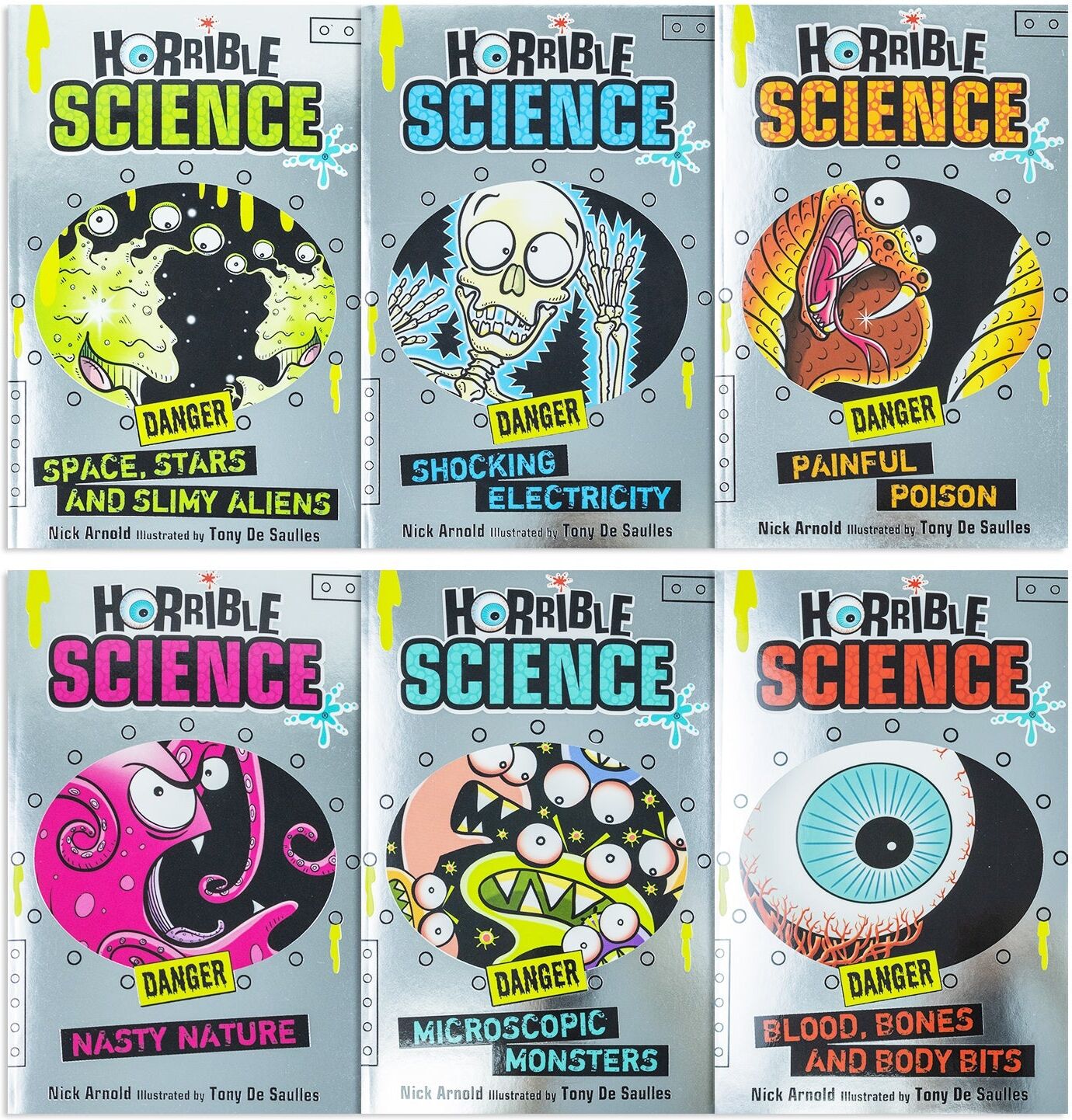
Scholastic Horrible Science 6 Books Collection Set by Nick Arnold – Educational Science Collection for KidsHorrible Science Collection 6 Books Set by Nick Arnold (Blood Bones and Body Bits, Microscopic Monsters, Nasty Nature, Painful Poison, Shocking Electricity, Space Stars and Slimy Aliens) Blood, Bones and Body Bits: Peek inside to discover all the squishy secrets of your body – including the nasty bits nobody wants to tell you! Find out what happens when a boil bursts (ugh) See what lives in your eyelashes (ewwwww) Gulp at the workings of your disgusting digestion (enough now...) And discover why corpses need haircuts even after they’re dead (blergh) Microscopic Monsters: Look down your microscope and dare to discover the terribly teeny world of Microscopic Monsters. Discover what makes our guts a brilliant home for bacteria, how germs make dead bodies explode and which creature lays its eggs between our toes. Nasty Nature: All the animals in HORRIBLE SCIENCE: NASTY NATURE are the deadliest, most disgusting and nastiest things that nature has to offer! So only read on if you're ready to find out: how vampire bats slurp blood, what a singing gorilla sounds like, how to dodge a man-eating tiger and which Japanese fish dish can kill you. Painful Poison: Get ready for a deadly dose of excitement with the petrifying Painful Poison. It's bubbling with killer substances that are strictly not for the nervous - and will have all kinds of evil effects on you. Discover how you can turn your brother into a zombie slave and why you are breathing poison right now! Shocking Electricity: Horrible Science: Shocking Electricity is packed with sizzling zap-filled facts to electrify every reader. Children can find out about the scientist who gave electric shocks to his eyeballs, that lightning can strike you with heat five times hotter than the sun and much more besides! Space, Stars and Slimy Aliens: Zoom to the stars with Oddblob the alien, and take part in a spacewalk that's out of this world and learn what the moon smells like. Find out all the horrible facts about space like which astronomers killed people and why space makes your guts explode!8,50 £*Shipping: 2,99 £Secure redirect to the provider
-
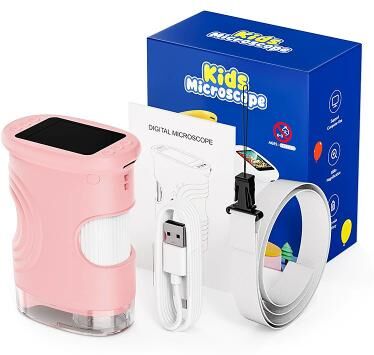
LightInthebox 4K Microscope, Magnifying Glass with Light, Microscope, 4K Magnifying Camera, 2-inch IPS Screen, 1000x Handheld Portable USB Digital Mini TelescopeResolution:1080P; LED Beads Quantity:8; Magnification:1000X; Type:Microscope; AC Voltage:5V; Listing Date:09/02/202653,99 $*Shipping: 7,90 $Secure redirect to the provider


-
What are microscope droplets?
Microscope droplets are tiny liquid particles that can form on the surface of a microscope lens or slide. These droplets can distort the image being viewed under the microscope, making it difficult to see the specimen clearly. Microscope droplets can be caused by condensation from the surrounding air, or by the transfer of liquid from the specimen onto the lens. It is important to regularly clean and maintain the microscope to prevent the formation of these droplets and ensure accurate observations. **
-
What are microscope objectives?
Microscope objectives are the lenses located at the lower end of a microscope that are responsible for magnifying the specimen being observed. They come in various magnification powers, such as 4x, 10x, 40x, and 100x, and are often color-coded for easy identification. The quality and design of microscope objectives can greatly impact the clarity and resolution of the images produced. Different objectives are used for different levels of magnification, allowing scientists and researchers to view specimens at various levels of detail. **
-
What are the advantages of a fluorescence microscope compared to a light microscope and an electron microscope? Thank you.
A fluorescence microscope has several advantages compared to a light microscope and an electron microscope. Firstly, it allows for the visualization of specific structures or molecules within a sample by using fluorescent dyes or proteins, which is not possible with a light microscope. Secondly, it provides higher resolution and better contrast compared to a light microscope, allowing for more detailed imaging of the sample. Lastly, it is less damaging to the sample compared to an electron microscope, which often requires the sample to be coated with heavy metals and subjected to a vacuum, potentially altering its natural state. **
-
What are the differences between a stereo microscope and a light microscope?
The main difference between a stereo microscope and a light microscope is their intended use. A stereo microscope is designed for viewing larger, three-dimensional objects at lower magnifications, while a light microscope is used for viewing smaller, two-dimensional specimens at higher magnifications. Additionally, a stereo microscope has two eyepieces and provides a three-dimensional view of the specimen, while a light microscope typically has one eyepiece and provides a two-dimensional view. Finally, the stereo microscope has a lower magnification range compared to the light microscope, which can achieve much higher magnifications. **


What is the difference between an electron microscope and a light microscope?
The main difference between an electron microscope and a light microscope is the type of radiation used to visualize the specimen. Electron microscopes use a beam of electrons to create a highly detailed image of the specimen, allowing for much higher magnification and resolution compared to light microscopes, which use visible light to visualize the specimen. This allows electron microscopes to visualize much smaller structures and details in the specimen. Additionally, electron microscopes are capable of producing 3D images of the specimen, while light microscopes typically produce 2D images. **
How can security be ensured in server hosting?
Security in server hosting can be ensured through a combination of measures such as implementing strong access controls, regularly updating and patching software, using firewalls and intrusion detection systems, encrypting data, and conducting regular security audits and vulnerability assessments. Additionally, using secure network protocols, implementing multi-factor authentication, and having a disaster recovery plan in place can also help enhance security in server hosting. It is important for hosting providers to stay updated on the latest security threats and best practices to continuously improve the security of their server hosting services. **
Top-Angebote
Products related to GeoSafari-Microscope-Science-Set:
-
GeoSafari Microscope Science Set for Kids - 50x-400x Magnification - Includes Prepared Slides and Activity JournalExplore science up close with the GeoSafari Microscope Science Set. This practical introduction to observing specimens and carrying out simple experiments is perfect for young scientists. With magnification from 50x to 400x, children can examine the included prepared slides before creating their own samples. The set includes a GeoSafari microscope, an activity journal with an experiment guide, 10 prepared slides, 5 blank slides, 10x and 20x magnifying eyepieces, a petri dish, pipette, and test tube with stopper. This hands-on exploration set supports learning by doing and is designed for children aged 7 and over. It introduces laboratory equipment in an accessible way. The microscope requires 2 AAA batteries, which are not included. The activity journal and packaging are multilingual.26,49 £*Shipping: 3,95 £Secure redirect to the provider
-
Learning Resources GeoSafari Jr. My First Microscope for Kids - 3+ - 7.6 x 25.7 x 35.6 cmIntroduce young explorers to the world of science with the GeoSafari Jr. My First Microscope. Designed for preschoolers by a scientist mom, this beginner microscope is a fully functional science tool made for little hands and curious minds. With two large eyepieces and a chunky, easy-to-turn focusing knob, kids can discover the details of everyday objects with ease. The bright LED light, activated by a simple push-button, brings every fascinating feature into view. This microscope is ideal for kids aged 3 and above, making it a great tool for sparking a love of science and exploration. Dimensions: 7.6 x 25.7 x 35.6 cm.19,79 £*Shipping: 3,95 £Secure redirect to the provider
-
Lisciani I Am A Genius Mini Microscope - Portable High Quality Microscope For On The Go Science Discovery For Kids - miniExplore the world of science with the Lisciani I Am A Genius Mini Microscope, a compact and portable microscope designed for on-the-go discovery. This high-quality microscope is perfect for curious young researchers who want to explore pond water, leaf veins, or fabric fibers anywhere. The included step-by-step manual guides users through core techniques, helping them frame questions, prepare samples, and capture insights. The microscope's ultra-compact design fits easily in backpacks and coats, making it ideal for classrooms, field trips, and family outings. With clear optics and a sturdy build, this mini microscope is perfect for budding biologists who want to learn and explore the world around them.10,89 £*Shipping: 3,95 £Secure redirect to the provider
-
Scholastic Microscope (with smartphone adapter)Travel deep into the microscopic realm! With this high-quality student microscope, Thames & Kosmos unlocks wonders of the world that are too small to see with the naked eye. Plus, the universal smartphone adapter lets you use your own smartphone...42,99 $*Shipping: 0,00 $Secure redirect to the provider
-
Which microscope is a nano-microscope?
A nano-microscope is a type of microscope that is capable of imaging objects at the nanoscale, which is on the order of billionths of a meter. One example of a nano-microscope is the scanning tunneling microscope (STM), which uses a sharp metal tip to scan the surface of a sample and create a detailed image of its atomic structure. Another example is the atomic force microscope (AFM), which uses a sharp tip to measure forces between the tip and the sample surface, allowing for high-resolution imaging of nanoscale features. Both of these microscopes are capable of imaging at the nanoscale and are therefore considered nano-microscopes. **
-
How do I set up a binocular microscope? Can someone help me?
Setting up a binocular microscope is a relatively simple process. First, place the microscope on a stable surface and ensure that it is plugged in or has fresh batteries. Next, adjust the interpupillary distance by moving the eyepieces closer or further apart to match the distance between your eyes. Then, adjust the diopter setting on each eyepiece to ensure that the image is in focus for both eyes. Finally, place a slide on the stage and use the coarse and fine focus knobs to bring the specimen into clear view. If you need further assistance, consider referring to the manufacturer's manual or seeking help from a colleague or supervisor. **
-
What are microscope droplets?
Microscope droplets are tiny liquid particles that can form on the surface of a microscope lens or slide. These droplets can distort the image being viewed under the microscope, making it difficult to see the specimen clearly. Microscope droplets can be caused by condensation from the surrounding air, or by the transfer of liquid from the specimen onto the lens. It is important to regularly clean and maintain the microscope to prevent the formation of these droplets and ensure accurate observations. **
-
What are microscope objectives?
Microscope objectives are the lenses located at the lower end of a microscope that are responsible for magnifying the specimen being observed. They come in various magnification powers, such as 4x, 10x, 40x, and 100x, and are often color-coded for easy identification. The quality and design of microscope objectives can greatly impact the clarity and resolution of the images produced. Different objectives are used for different levels of magnification, allowing scientists and researchers to view specimens at various levels of detail. **
Similar search terms for GeoSafari-Microscope-Science-Set
-
Scholastic Horrible Science 6 Books Collection Set by Nick Arnold – Educational Science Collection for KidsHorrible Science Collection 6 Books Set by Nick Arnold (Blood Bones and Body Bits, Microscopic Monsters, Nasty Nature, Painful Poison, Shocking Electricity, Space Stars and Slimy Aliens) Blood, Bones and Body Bits: Peek inside to discover all the squishy secrets of your body – including the nasty bits nobody wants to tell you! Find out what happens when a boil bursts (ugh) See what lives in your eyelashes (ewwwww) Gulp at the workings of your disgusting digestion (enough now...) And discover why corpses need haircuts even after they’re dead (blergh) Microscopic Monsters: Look down your microscope and dare to discover the terribly teeny world of Microscopic Monsters. Discover what makes our guts a brilliant home for bacteria, how germs make dead bodies explode and which creature lays its eggs between our toes. Nasty Nature: All the animals in HORRIBLE SCIENCE: NASTY NATURE are the deadliest, most disgusting and nastiest things that nature has to offer! So only read on if you're ready to find out: how vampire bats slurp blood, what a singing gorilla sounds like, how to dodge a man-eating tiger and which Japanese fish dish can kill you. Painful Poison: Get ready for a deadly dose of excitement with the petrifying Painful Poison. It's bubbling with killer substances that are strictly not for the nervous - and will have all kinds of evil effects on you. Discover how you can turn your brother into a zombie slave and why you are breathing poison right now! Shocking Electricity: Horrible Science: Shocking Electricity is packed with sizzling zap-filled facts to electrify every reader. Children can find out about the scientist who gave electric shocks to his eyeballs, that lightning can strike you with heat five times hotter than the sun and much more besides! Space, Stars and Slimy Aliens: Zoom to the stars with Oddblob the alien, and take part in a spacewalk that's out of this world and learn what the moon smells like. Find out all the horrible facts about space like which astronomers killed people and why space makes your guts explode!8,50 £*Shipping: 2,99 £Secure redirect to the provider
-
LightInthebox 4K Microscope, Magnifying Glass with Light, Microscope, 4K Magnifying Camera, 2-inch IPS Screen, 1000x Handheld Portable USB Digital Mini TelescopeResolution:1080P; LED Beads Quantity:8; Magnification:1000X; Type:Microscope; AC Voltage:5V; Listing Date:09/02/202653,99 $*Shipping: 7,90 $Secure redirect to the provider
-
Fox Eye Publishing Introduction to Science for Beginners Series 2 – 10 Books Collection Set – Educational Science Learning CollectionThe 'Introduction to Science Series 2' comprises a comprehensive 10-book set that delves into fundamental scientific concepts across various domains. Each book offers an accessible and engaging exploration of its specific topic, making science approachable for learners of all levels. Here's a breakdown of the titles included: Introduction to Energy: What is energy and how do we use it? Find out about the amazing power of energy inside. Introduction to Earthquakes and Tsunamis: What are earthquakes and tsunamis and what causes them? Find out the answers to these questions and many more inside. Introduction to Planet Earth: Our Earth has amazing rivers, sky-scraping mountains, hot deserts and more! Find out more about it inside. Introduction to Solar System: What is a solar system and what is in our Solar System? Find out the answer to this question and many more inside. Introduction to Weather: How is weather made and how do we study and measure it? Find out about our amazing world of weather inside. Introduction to Life Cycles: What are life cycles and how do they work? Find out about the amazing world of life cycles inside. Introduction to Light: What is light and how do we use it? Find out about the amazing power of light inside. Introduction to Magnetism: What is magnetism and how do we use it? Find out about the amazing force of magnetism inside. Introduction to Your Amazing Body: What awesome things happen inside your body every day? Find out about your amazing body inside. Introduction to Pollution: What is pollution and how is it damaging our world? Find out about pollution and what we can do to stop it inside. This series serves as an invaluable resource, offering a gateway to scientific knowledge and fostering a profound appreciation for the wonders of the natural world while promoting an understanding of key scientific principles.9,99 £*Shipping: 2,99 £Secure redirect to the provider
-
LightInthebox 4K Microscope, Magnifying Glass with Light, Microscope, 4K Magnifying Camera, 2-inch IPS Screen, 1000x Handheld Portable USB Digital Mini TelescopeResolution:1080P; LED Beads Quantity:8; Magnification:1000X; Type:Microscope; AC Voltage:5V; Listing Date:09/02/202653,99 $*Shipping: 7,90 $Secure redirect to the provider
-
What are the advantages of a fluorescence microscope compared to a light microscope and an electron microscope? Thank you.
A fluorescence microscope has several advantages compared to a light microscope and an electron microscope. Firstly, it allows for the visualization of specific structures or molecules within a sample by using fluorescent dyes or proteins, which is not possible with a light microscope. Secondly, it provides higher resolution and better contrast compared to a light microscope, allowing for more detailed imaging of the sample. Lastly, it is less damaging to the sample compared to an electron microscope, which often requires the sample to be coated with heavy metals and subjected to a vacuum, potentially altering its natural state. **
-
What are the differences between a stereo microscope and a light microscope?
The main difference between a stereo microscope and a light microscope is their intended use. A stereo microscope is designed for viewing larger, three-dimensional objects at lower magnifications, while a light microscope is used for viewing smaller, two-dimensional specimens at higher magnifications. Additionally, a stereo microscope has two eyepieces and provides a three-dimensional view of the specimen, while a light microscope typically has one eyepiece and provides a two-dimensional view. Finally, the stereo microscope has a lower magnification range compared to the light microscope, which can achieve much higher magnifications. **
-
What is the difference between an electron microscope and a light microscope?
The main difference between an electron microscope and a light microscope is the type of radiation used to visualize the specimen. Electron microscopes use a beam of electrons to create a highly detailed image of the specimen, allowing for much higher magnification and resolution compared to light microscopes, which use visible light to visualize the specimen. This allows electron microscopes to visualize much smaller structures and details in the specimen. Additionally, electron microscopes are capable of producing 3D images of the specimen, while light microscopes typically produce 2D images. **
-
How can security be ensured in server hosting?
Security in server hosting can be ensured through a combination of measures such as implementing strong access controls, regularly updating and patching software, using firewalls and intrusion detection systems, encrypting data, and conducting regular security audits and vulnerability assessments. Additionally, using secure network protocols, implementing multi-factor authentication, and having a disaster recovery plan in place can also help enhance security in server hosting. It is important for hosting providers to stay updated on the latest security threats and best practices to continuously improve the security of their server hosting services. **
* All prices are inclusive of VAT and, if applicable, plus shipping costs. The offer information is based on the details provided by the respective shop and is updated through automated processes. Real-time updates do not occur, so deviations can occur in individual cases. ** Note: Parts of this content were created by AI.